

Retail store management: The 7 most common mistakes and how to avoid them
The expansion of a retail company from a single store to a network of branches is a decisive milestone. However, new, complex challenges also come with growth. Effective store management is the key to success, but many companies tap into the same traps. In this post, we highlight the seven most common mistakes in multi-store management and show you how to avoid these proactively in order to secure sustainable growth.
1. Lack of central visibility and control
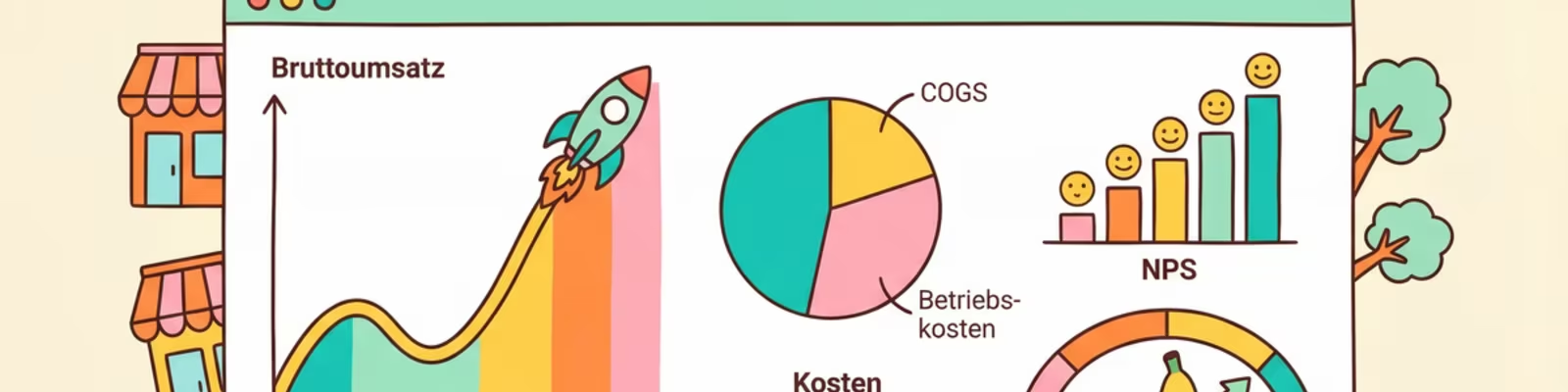
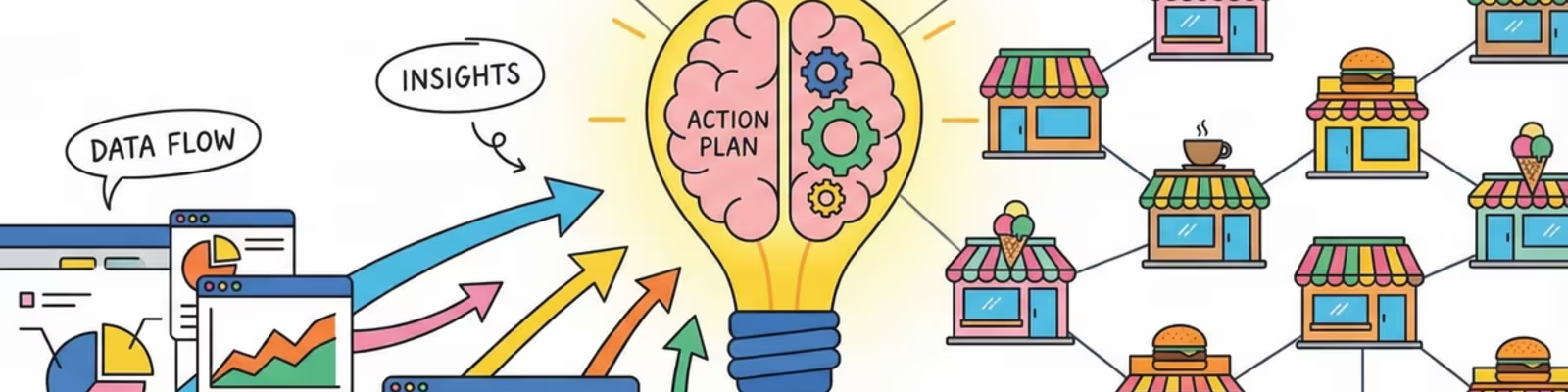
One of the most serious errors is the lack of a central overview of all branches. Without a single data platform, each branch operates like an isolated island. This leads to inconsistent processes, makes performance tracking more difficult and makes it impossible to make informed, company-wide decisions. Important key figures (KPIs) such as sales, inventory and employee performance are scattered over various systems, which prevents a quick and accurate overview.
** Solution:** Implement a central management platform that consolidates data from all branches in real time. Such a system offers a dashboard with all relevant KPIs at a glance and allows you to respond quickly to deviations and make data-based decisions.
2. Inefficient inventory management
Different stocks in each branch, lack of transparency about the total stock and manual reordering processes are poison for profitability. Too much stock binds capital and increases the risk of shopkeepers, while too little stock leads to loss of sales and unsatisfied customers. Without a networked view, it is impossible to optimize the flow of goods between branches or to react flexibly to local demand fluctuations.
** Solution:** A centralized commodity management system is essential. It not only allows accurate tracking of stocks in each branch, but also automation of orders and intelligent redistribution of goods between locations. Make sure the right product is in the right place at the right time.
3. Inconsistent customer experience
Customers expect a seamless and consistent experience today, no matter which branch they visit. Different prices, different marketing actions or a varying service level harm the brand image and customer retention. If a customer in a branch makes a different experience than in another, that undermines confidence in your brand.
** Solution:** Define clear, company-wide standards for pricing, marketing, visual merchandising and customer service. Regular training and central control ensure that these standards are consistently implemented in all branches. A central CRM system can also help to use customer information across the range and create a personalized experience.
4. Lack of internal communication
If information from the headquarters is not available or only incomplete with the branch managers and employees, chaos and errors are pre-programmed. Important instructions on new products, marketing campaigns or operational changes must quickly and reliably reach all relevant persons. Emails and telephone calls are often inefficient and susceptible to errors.
Solution: Use a dedicated communication platform that allows you to specifically send information to all or selected branches. Task management tools help track the implementation of instructions and ensure that all are at the same level.
5. Inflexible personal planning
Personal planning is a constant challenge in retail.Rigid service plans that ignore local peculiarities such as downtime or employee preferences lead to under- or over-compensation. This results either in poor service and stressed employees or in unnecessarily high personnel costs. The coordination of holiday requests and medical reports across multiple locations is quickly unclear.
** Solution:** Modern personnel planning software allows flexible and demand-oriented deployment planning. It can take into account sales forecasts to optimize personnel needs, and gives employees the opportunity to digitally manage their availability. This increases employee satisfaction and reduces costs.
6. Separate and outdated IT systems
Many grown branch systems suffer from a fragmented IT landscape. Different cash systems, separate accounting programs and isolated goods management systems prevent a smooth flow of data. The manual transmission of data is not only time-consuming, but also an enormous source of error.
Solution: Set up an integrated software solution that combines all core processes of retail – from cashiers to goods management to accounting – in one system. Such an all-in-one solution creates a single source of turkey and automates numerous processes, which increases efficiency and minimizes errors.
7. Reliance on employee development
The training and further development of employees is often neglected in the hectic of daily business. But well-trained and motivated employees are the backbone of every successful retail company. Lack of knowledge about products or processes leads directly to poorer service and lower sales figures. A high employee turnover is often the expensive result.
** Solution:** Invest in regular and standardized training programs. E-learning platforms can help efficiently distribute training content to all employees in all branches. Create clear career paths and promote a culture of appreciation to bind your best talents to the company in the long term.
Conclusion: Centralization as key to success
The successful management of several branches requires more than just the duplication of a successful concept. The key is the centralization of data, processes and communication. By avoiding these errors and putting them on an integrated management solution, you create the basis for scalability, efficiency and a consistent brand experience.
Are you ready to lift your store management to the next level? Hyperspace GmbH offers specialized software solutions that are precisely tailored to the needs of retailers. Contact us for non-binding advice and learn how we can help you control your branches centrally and successfully.
Related articles

Matching primary solution
For a deeper feature and rollout context, start from Franchise management software.