
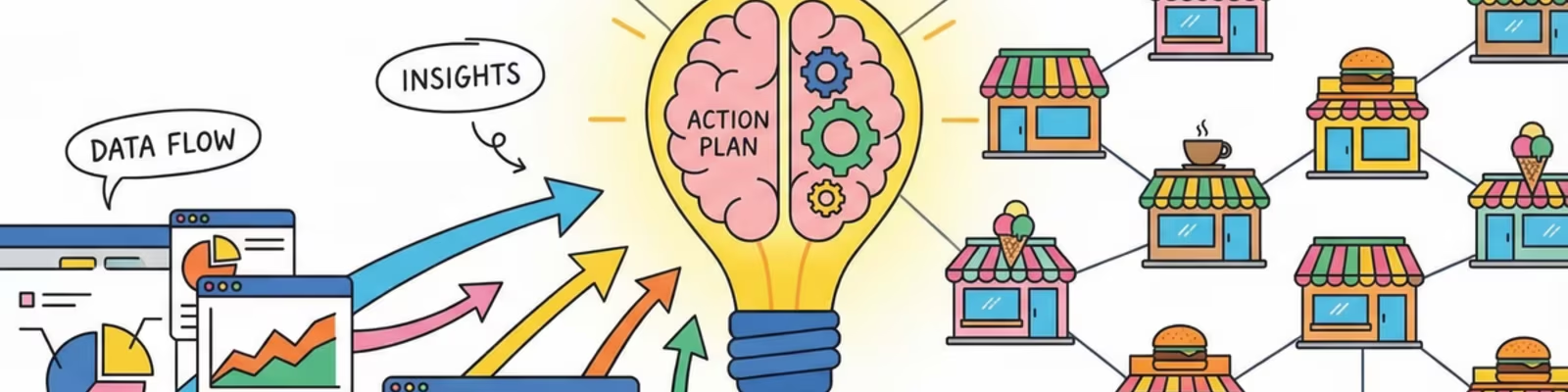
Multi-Location Management: How Franchise CRM manages multiple locations efficiently
Introduction: The challenge of multi-location management in franchising
In the dynamic world of franchising, growth is often synonymous with expansion – the opening of new locations in different cities, regions or even countries. While this expansion is a sign of the success of a brand, it brings an exponentially growing complexity. The management of two or three sites may still be handled by traditional methods such as spreadsheets, email distributors and telephone calls. But what happens when a franchise system grows to ten, fifty or hundreds of locations? The challenges of multi-location management will then become a significant obstacle to sustainable success. Without a centralised system, maintaining brand consistency, ensuring excellent customer service and monitoring operational efficiency at every single location becomes a sisyphus task. This is where modern technology solutions are used. A specialized Franchise CRM (Customer Relationship Management) is not only a tool for customer management, but a comprehensive platform designed to master the unique challenges of franchise companies and revolutionize the management of multiple locations.
What is a franchise CRM? Definition
At first glance, one could assume that each standard CRM system is sufficient for a franchise company. But this assumption overlooks the fundamental differences in structure and requirements. A conventional CRM focuses on the linear relationship between a company and its customers. A Franchise CRM, on the other hand, must represent a much more complex, three-dimensional relationship: the relationship between the franchisor (central), the franchisees (the individual locations) and the end customers. It is a specialized software solution designed specifically for the needs of franchise systems. It goes far beyond the pure customer relationship management and acts as a central nervous system for the entire network. A CRM for franchise companies integrates sales, marketing, operating and communication processes on a single platform, taking into account the hierarchical structure of the franchise model. It understands that each franchise is an independent entrepreneur, but at the same time an integral part of a larger brand that must comply with uniform standards and processes.
The core advantages of a centralized CRM system for franchises
The implementation of a centralized Franchise Management Software offers a wealth of advantages that directly affect the scalability, profitability and brand value of a franchise system.
1. Unified data and central control
In a decentralized system, customer data is often scattered across numerous incompatible systems at the individual locations. This leads to data silos, inconsistencies and a fragmented image of the customer base. A central Franchise CRM breaks this silos. All customer information, from contact data to purchasing history to service requests, are stored in a single secure location. This not only allows a 360-degree view of the customer across the entire network, but also gives the franchisor the necessary control and overview to make strategic decisions based on complete and consistent data. Each authorized employee, whether in the headquarters or at a location, accesses the same “Single Source of Truth” which improves cooperation and reduces errors.
2. Optimised marketing and brand consistency
One of the cornerstones of franchising is a uniform brand appearance. Customers expect the same experience at each location, the same product quality and the same service quality. A centralized CRM for franchise companies is the key tool to ensure this brand consistency. Marketing campaigns can be centrally created, managed and rolled out for all or selected locations. This ensures that the brand message remains consistent and all legal and design requirements are complied with. At the same time, the system can give franchisors the flexibility to carry out local marketing initiatives within predefined framework conditions to address the specific needs of their market.
3. Efficient lead management and sales tracking
For a growing franchise system, the efficient collection and distribution of new customer requests (leads) is crucial. A Franchise CRM automates this process. Leads generated via the corporate website, social media or other channels can be automatically recorded and assigned to the relevant franchise location using geographical or other predefined criteria. This significantly shortens the reaction times and ensures that no potential customer is lost. In addition, the software allows seamless tracking of sales activities at any location. The franchisor can analyse the conversion rates, sales performance and effectiveness of different channels and thus offer targeted support and training.
4. Increased operational efficiency
The standardization of business processes is a key to scalability in franchising. A powerful Franchise Management Software enables the automation of a variety of routine tasks, from scheduling to offering creation to accounting. The definition of standardized workflows ensures that the same proven procedures are applied at each location. This not only reduces the manual effort and susceptibility to errors, but also releases valuable time for franchises and their employees, who can instead invest in customer-oriented activities and the growth of their business.
5. Comprehensive reporting and analysis
“What you can’t measure cannot be managed.” This quotation applies in particular to franchise systems. A central CRM collects a huge amount of data from the entire network. The true strength, however, is the ability to convert this data into meaningful reports and analyses. Modern Franchise CRM systems provide intuitive dashboards that visualize key performance indicators (KPIs) in real time. The franchisor can monitor the overall performance of the network, compare the performance of individual locations (benchmarking) and identify trends or problem areas at an early stage. These data-based insights are the basis for sound strategic decisions and proactive control of the entire franchise system.
Key Features of Franchise Management Software
A comprehensive Franchise Management Software is more than just a CRM. It is an all-in-one platform that integrates a number of specialized modules and functions to support the entire life cycle of a franchisee.
Location management
This module functions as a central directory for all franchise locations. It not only stores basic information such as address and contact data, but also detailed profiles that can include boundaries, demographic data, local competitors and location-specific performance data. This allows a granular analysis and targeted support for each individual partner.
.### Contract and Fee Management
The management of franchise contracts and the correct calculation of fees are critical but often complex tasks. An integrated module automates this process. It monitors contract terms, reminds of important deadlines and automatically charges recurring fees such as royalties or marketing fees based on the rules laid down in the contract. This ensures transparency and significantly reduces administrative expenditure.
Communication and collaboration tools
Effective communication is the link that holds a franchise network together. The software should provide a central communication hub that promotes the exchange between the central and the franchisees and the franchisees via secure message functions, forums or integrated intranet functions. This facilitates the dissemination of important announcements, the exchange of best practices and strengthens the common sense in the network.
Training and onboarding platform
A standardized and effective onboarding process is crucial for the success of new franchises. Many Franchise Management Software solutions integrate a Learning Management System (LMS) that allows the provision of online training materials, videos, manuals and certifications. This ensures that every new partner receives the same high-quality training and becomes productive quickly.
Performance dashboards
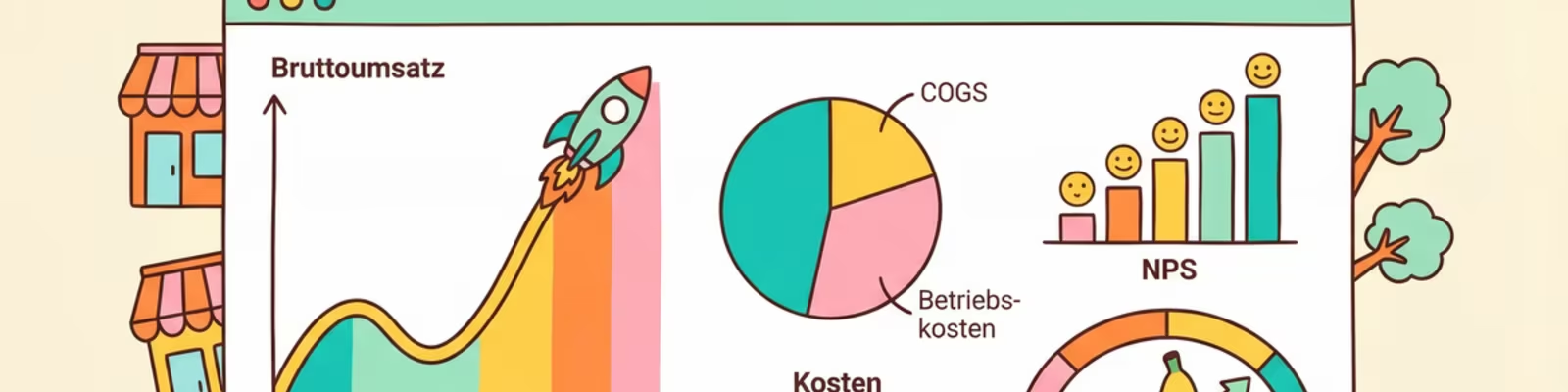
Visual dashboards are the cockpit for the franchisor. They prepare complex data in easily understandable diagrams and graphics. At a glance, key KPIs such as sales, customer satisfaction, lead conversion and operational key figures can be viewed for the entire network or individual locations. This allows proactive management and quick identification of successes and challenges.
Implementation of a Franchise CRM: Best Practices
The introduction of a new software is a strategic project that needs to be carefully planned to be successful. The selection of the right provider is the first decisive step. Look for a partner who has proven experience in the franchise industry and understands the specific challenges of your business model. Another critical success factor is the early involvement of franchisees in the selection and implementation process. Their acceptance and commitment are essential. Ensure that the benefits of the new system are clearly communicated and provide comprehensive training to ensure a smooth transition.
Conclusion: The future of franchise management is centralized and data-driven
The management of a growing franchise network in today's competitive environment requires more than just entrepreneurial instinct. It requires technology that reduces complexity, increases efficiency and enables data-based decisions. A specialized Franchise CRM is no longer an option, but a need for any franchise system that wants to grow and scale sustainably. Through the centralization of data, the standardization of processes and the provision of comprehensive insights, such a platform provides the basis for a consistent brand experience, satisfied franchisees and enthusiastic customers at each individual location. The future of successful multi-location management is undoubtedly centralized, networked and intelligent.
References
Main article: [Franchise CRM: The ultimate implementation guide for franchisers](/blog/franchise-crm-franchise-crm-der-ultimative implementation guide thread)
Related articles

Matching primary solution
For a deeper feature and rollout context, start from Franchise management software.